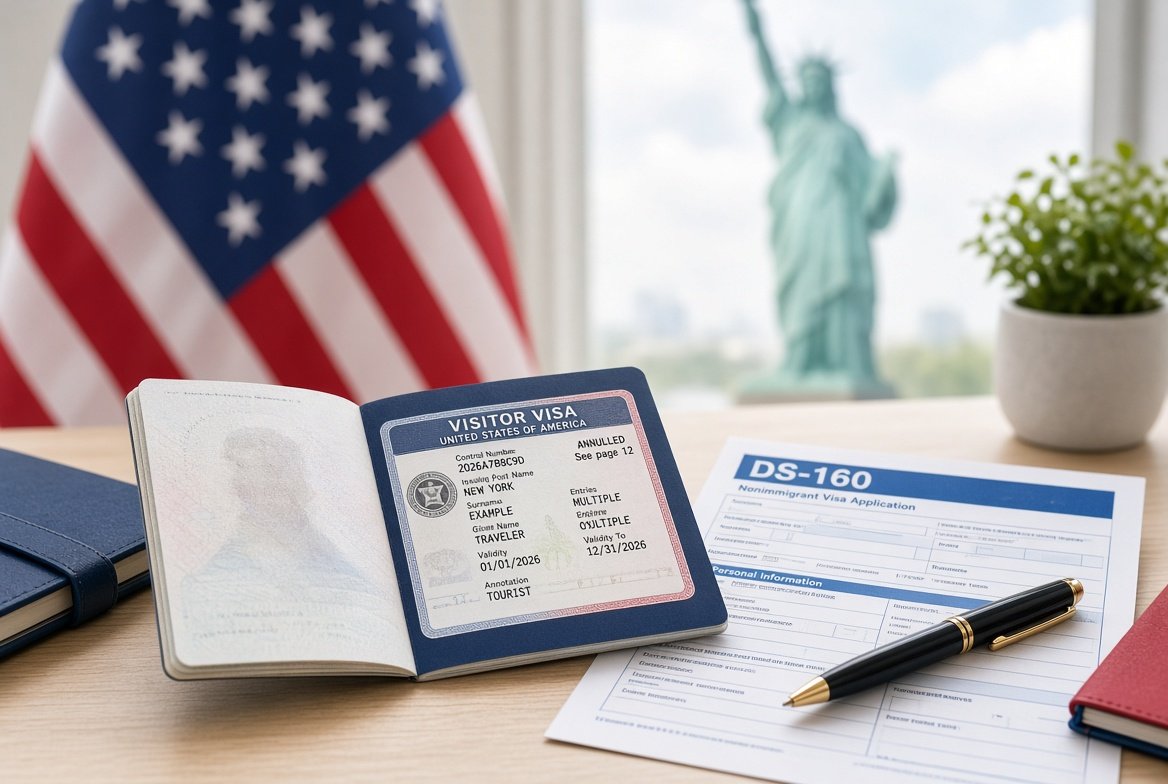
Visiting the United States remains a top travel goal for millions worldwide, drawn by its diverse landscapes, iconic cities, cultural attractions, business opportunities, and family connections. The B-1/B-2 visitor visa serves as the primary entry permit for tourism, business, medical treatment, or short visits.
This comprehensive 2026 guide covers everything you need to know about applying for a US tourist visa. It includes eligibility details, the full application process, required documents, interview preparation, financial proof strategies, common pitfalls, and success tips. Whether you’re planning a family vacation, attending a conference, or exploring new destinations, this resource provides clear, actionable advice to help strengthen your application.
Important Disclaimer: Visa rules can change. Always consult the official US Department of State website (travel.state.gov) and your local US embassy or consulate for the most current information.
Understanding the US B-1/B-2 Visitor Visa
The United States offers nonimmigrant visas for temporary visits:
- B-1 Visa: Primarily for business activities such as meetings, negotiations, or conferences.
- B-2 Visa: For tourism, pleasure, medical treatment, or visiting friends and family.
- Combined B-1/B-2: The most common category, offering flexibility for mixed purposes.
Typical validity allows stays of up to six months per visit, though the exact duration is determined by immigration officers at the port of entry. Multiple-entry visas are possible based on your travel history and profile.
The US visa process emphasizes proving that you intend to return home after your visit and have sufficient ties and resources abroad.
Who Needs a US Tourist Visa?
Most citizens from countries without a Visa Waiver Program (VWP) must obtain a B-1/B-2 visa. Even VWP participants may need a visa for certain purposes or longer stays. Use the US Visa Wizard tool on travel.state.gov to confirm your requirements.
Step-by-Step Application Process
- Complete the DS-160 Online Application Form Fill out the DS-160 form electronically at the CEAC website (ceac.state.gov). This detailed form collects personal, travel, and background information.
- Upload a compliant digital photo (white background, recent, meeting exact specifications).
- Save the confirmation page with the barcode number — you will need it for scheduling and the interview.
- Pay the Non-Refundable Visa Application Fee The MRV fee is required before scheduling. Amounts are listed on the official embassy site (typically around USD 185, subject to change). Payment methods vary by country.
- Schedule Your Interview Appointment Create an account on the relevant US visa scheduling portal for your country.
- Select the US embassy or consulate nearest to you.
- Book an available slot. Wait times vary widely by location.
- Prepare for possible biometrics collection (fingerprints and photograph).
- Gather and Organize Required Documents Bring originals and copies to the interview. Organization and completeness are key.Core Documents:
- Valid passport (must remain valid for at least six months beyond your planned stay in many cases).
- DS-160 confirmation page.
- Visa fee payment receipt.
- Appointment confirmation letter.
- Recent photographs (if requested).
- Proof of Purpose: Detailed itinerary, hotel reservations, flight bookings (printouts are acceptable initially), invitation letters from hosts or event organizers, or medical referrals.
- Financial Proof: Bank statements, pay slips, tax returns, or sponsorship documents demonstrating you can cover all trip expenses without unauthorized employment.
- Ties to Home Country: Employment letters (including salary, position, and approved leave), business ownership papers, property documents, family certificates, or enrollment proof if a student.
- Travel History: Previous passports or visas showing compliance with immigration rules.
- Cover Letter: A concise personal statement explaining your travel purpose and reasons for returning home.
- Attend the Visa Interview Arrive early and follow all security protocols (limited items allowed). The consular officer will conduct a brief interview focusing on your plans, background, and intent. Answer honestly, clearly, and confidently. Be prepared to discuss your job, family, finances, and itinerary in detail.
- Track Your Application Status Use the CEAC website or your local portal. If approved, your passport with the visa stamp is usually returned within a few business days.
Financial and Ties Requirements
Consular officers assess whether you have strong reasons to return home. Key elements include:
- Stable employment or business.
- Family and social connections.
- Property or other obligations.
- Sufficient funds for the entire trip (estimates vary by duration and destination but often start at several thousand USD per person).
Provide recent, verifiable financial records. Sudden large deposits without explanation can raise concerns.
Common Rejection Reasons and How to Avoid Them
The most frequent refusal ground is Section 214(b) — failure to overcome the presumption of immigrant intent. Other issues include:
- Insufficient documentation of ties or finances.
- Vague or inconsistent travel plans.
- Incomplete or inaccurate DS-160 information.
- Weak interview responses.
Success Strategies:
- Present a clear, realistic itinerary supported by bookings.
- Emphasize professional, family, and financial ties to your home country.
- Practice common interview questions: “What is the purpose of your trip?”, “How long will you stay?”, “What do you do for a living?”, and “Who is funding the trip?”
- If previously refused, address prior concerns with additional evidence in a new application.
- Avoid rushing — allow ample preparation time.
Additional Tips for a Strong Application in 2026
- Apply several months before your intended travel.
- Build a positive travel history with compliant visits to other countries.
- Consider travel insurance and full vaccinations as recommended.
- For group or family applications, coordinate documents while highlighting individual ties.
- Stay informed via official channels about any new processing requirements or systems.
After Approval: Next Steps
- Review your visa for accuracy (name, validity, entry limits).
- Prepare for arrival questioning at the US port of entry — consistency is crucial.
- Respect all visa conditions to protect future travel opportunities.
Exploring Other Tier-1 Destinations
If facing challenges with the US process, similar principles apply to other high-demand countries like the United Kingdom (Standard Visitor visa), Canada (Visitor visa or eTA), Australia (Tourist visa subclass 600), or Schengen Area countries. Each emphasizes purpose, finances, and home ties.
Conclusion
Applying for a US tourist visa requires attention to detail, honesty, and strong supporting evidence. By following this step-by-step guide and focusing on genuine temporary intent, applicants worldwide can improve their prospects for approval in 2026. Thorough preparation turns a complex process into a manageable one. Safe travels and enjoy your American experience!